


It is reasonable to be skeptical of alternative therapies in veterinary medicine, but acupuncture, laser therapy, and PEMF have real clinical applications for pets, and the evidence behind them has grown considerably in the past decade. They are most effective when matched to the right condition and used as part of a broader care plan rather than as a standalone fix. For pets managing chronic pain, recovering from injury, or dealing with conditions that have not fully responded to conventional treatment alone, integrative options can meaningfully improve comfort and quality of life. Neither replaces diagnostics or conventional medicine, but they offer a tool for managing what has already been diagnosed, often reducing the medication burden and improving day-to-day function.
At MountainView Veterinary Hospital in Denville, our alternative medicine services include acupuncture, laser therapy, PEMF, and herbal therapy, offered alongside conventional care as part of an integrated approach. Because these therapies sit in the same building as our general medicine and surgery, your pet’s integrative and conventional care stay coordinated. If you are curious whether any of these might help your pet’s specific situation, get in touch and we will talk through what fits.
Integrative Therapies at a Glance
- The evidence is real for specific uses: acupuncture, laser therapy, and PEMF have support for chronic pain, arthritis, neurological conditions, and post-surgical recovery.
- They complement, not replace: these therapies work best alongside conventional diagnostics and treatment, not instead of them.
- Veterinary oversight is essential: especially for herbal therapy, where formulas must be safe with any existing medications.
- Most pets need a series, not a single visit: the benefits build over multiple sessions for most chronic conditions.
What Is Alternative Medicine, Exactly?
Traditional Chinese Veterinary Medicine is the veterinary adaptation of principles refined over centuries in human medicine, then translated into protocols specifically for animal patients. The framework centers on Qi, or vital energy, flowing through the body along meridians, and on imbalances in that flow as one way to understand chronic illness. Alternative medicine, also known as integrative care, uses the same principles alongside modern modalities like laser therapy and PEMF, which apply newer technology to the same goals of pain control, healing, and function.
For pet owners coming from a Western medicine background, the framework can feel unfamiliar. The useful way to think about it is that integrative medicine offers a different lens for assessing what is happening in your pet and a different set of tools for addressing it, and those tools work best alongside, not instead of, the conventional diagnostic and treatment approaches we use every day.
Why Do Pet Owners Choose Integrative Therapies?
Most families raise integrative options for a specific clinical reason rather than a general preference, usually when conventional care has not fully solved a problem or when they want to reduce a pet’s medication load. The situations that come up most often:
- Chronic pain that has not fully responded to NSAIDs and other conventional pain management
- Mobility issues where conventional treatment helps but does not fully restore function
- Post-surgical recovery where additional support helps rebuild function and shorten healing time
- Neurological conditions like intervertebral disc disease where physical modalities support nerve recovery
- Anxiety and stress that is not resolving with environmental management alone
- Digestive sensitivity that persists despite dietary trials
- Conditions in pets who cannot tolerate certain medications for medical reasons
Personalized care approaches like integrative therapies are particularly useful for chronic conditions including arthritis, neurological issues, skin allergies, GI problems, and recovery support, and they complement rather than replace Western medicine. Because the goal is added comfort and function rather than a cure, these therapies tend to shine in exactly the slow, stubborn cases that conventional medicine manages but does not fully resolve.
What Are the Core Alternative Therapies?
MountainView offers four integrative modalities, each suited to particular conditions and often used in combination depending on what a pet needs.
| Therapy | What it does | Common uses |
| Acupuncture | Stimulates nerves, modulates pain pathways, reduces inflammation | Arthritis, disc disease, neurological recovery, chronic pain |
| Laser therapy | Uses light energy to reduce inflammation and accelerate tissue healing | Post-surgical recovery, wounds, arthritis, soft tissue injuries |
| PEMF | Uses pulsed electromagnetic fields to improve cellular function and reduce inflammation | Pain, soft tissue injury, post-op recovery, arthritis |
| Herbal medicine | Targets inflammation, digestion, anxiety, immune support | Vet-monitored adjunct support for chronic conditions |
The detail on each modality follows below.
Acupuncture for Pain and Neurological Support
Acupuncture uses fine, sterile needles at specific points to influence nerve pathways, reduce inflammation, and release endorphins. The mechanism is increasingly understood in conventional terms, since stimulation at these points produces measurable effects on neurotransmitters, inflammatory mediators, and local blood flow. Common veterinary uses:
- Arthritis pain in dogs and cats
- Back pain and intervertebral disc disease
- Hip dysplasia
- Neurological conditions, including some seizure presentations
- Post-surgical recovery
- Some types of chronic GI conditions
Many pets relax during sessions and even look forward to subsequent visits, since the needles are very fine and most pets tolerate them well after the first session. Dr. Boggier is a certified veterinary acupuncturist, and offers electroacupuncture, aquapuncture, and traditional acupuncture. Electroacupuncture adds a gentle electrical current to the needles to increase stimulation for cases where stronger neuromodulation is needed. Aquapuncture involves injecting sterile saline or B vitamins into the acupuncture points to strengthen the response. We’ll discuss the best options for your individual pet.
A typical course starts with weekly sessions for several weeks, with the interval gradually lengthening as the pet’s response stabilizes. Some pets reach a maintenance schedule of every few weeks; others use acupuncture episodically when symptoms flare. Sessions usually last 20 to 30 minutes, with the needles in place for most of that time while the pet rests.
Laser Therapy for Healing and Pain Control
Laser therapy uses focused light energy at specific wavelengths to penetrate tissue and produce measurable effects at the cellular level. The mechanism, sometimes called photobiomodulation, increases cellular energy production, improves local blood flow, reduces inflammatory mediators, and accelerates tissue repair. The result is reduced pain, faster healing, and improved function across a wide range of conditions. Our practice uses a class IV therapeutic laser, which delivers the depth of penetration needed for joint and deep soft tissue applications.
Common uses include:
- Arthritis pain, particularly in dogs whose pain is not fully controlled by NSAIDs alone or who need a lower medication dose
- Post-surgical recovery, especially after orthopedic procedures, where it reduces incision-site swelling, accelerates healing, and lowers pain medication needs
- Soft tissue injuries like ligament sprains, tendon strains, and muscle injuries
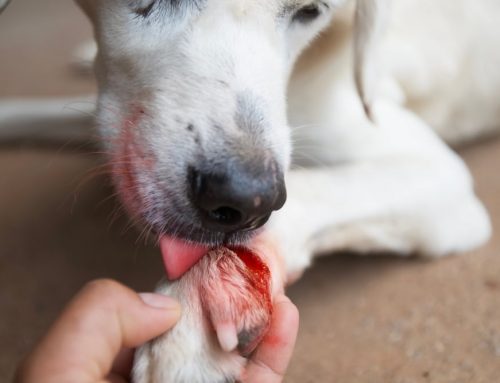
- Wound healing, including slow-healing incisions, lick granulomas, and certain skin conditions
- Chronic conditions like lick granulomas, hot spots, and stomatitis in cats
- Acute injuries like sprains, contusions, and post-trauma swelling
The treatment itself is painless and non-invasive. The handpiece is moved slowly over the treatment area for several minutes, and most pets find the gentle warmth comfortable enough that they relax or even doze through the session. There are no needles, no sedation, and no recovery period. Sessions typically last 5 to 20 minutes depending on the size and number of areas being treated, and most conditions respond best to a series of sessions, usually two to three times a week initially, then tapering as the response builds.
PEMF Therapy for Cellular-Level Healing
Pulsed electromagnetic field therapy, or PEMF, delivers low-level electromagnetic pulses through a mat, loop, or bed that the pet rests on during the session. The pulses work at the cellular level, supporting the ion exchange that drives cellular repair, reducing inflammation, and improving blood flow to the treated area. PEMF has been used in human medicine for decades, particularly for bone healing, and its veterinary applications have expanded as more practices adopt the technology. Our PEMF therapy service is most often used alongside other modalities, since the mechanisms complement each other well.
Common uses include:
- Bone and fracture healing, including post-surgical orthopedic recovery
- Soft tissue injuries where reduced inflammation and accelerated repair shorten the recovery window
- Chronic pain and arthritis, particularly as part of a multimodal management plan
- Post-surgical recovery broadly, where it pairs well with laser therapy and acupuncture
- Wound healing, including incisions and skin conditions that have been slow to resolve
- Edema and swelling, where the improved circulation helps clear the affected area
The pet rests on the PEMF mat or bed for the duration of the session, typically 15 to 30 minutes. There is no sensation associated with the treatment, no needles, no light, no warmth, just the pet lying comfortably while the therapy works. Many pets fall asleep during sessions, which is sometimes the first time their families have seen them truly relax in months. Because PEMF is entirely non-invasive and well tolerated, it is often a good fit for pets who are very anxious, very painful, or otherwise hard to handle for more hands-on modalities.
PEMF is also one of the modalities that combines well with the others. A typical visit for a senior arthritic dog might include 20 minutes of PEMF while the pet rests, followed by acupuncture, followed by laser therapy on the most affected joints. The modalities work through different mechanisms, so layering them often produces better results than any one therapy alone.
Herbal Medicine for Targeted Support
Veterinary herbal formulas can complement acupuncture, laser, and PEMF by addressing inflammation, pain, digestion, immunity, and anxiety from the inside. Critically, formulas should always be prescribed and monitored by trained veterinarians, because herbal medicines can interact with conventional medications and “natural” does not mean “safe” without proper assessment. Our herbal therapy service includes a review of all current medications before adding any formula, with ongoing monitoring as needed.
What Happens at an Alternative Medicine Appointment?
An alternative medicine visit looks somewhat different from a conventional appointment, though our diagnostics and conventional workup remain part of the assessment. The visit typically includes:
- A comprehensive physical exam, the same as any wellness or sick visit
- A review of medical history, including current medications, recent diagnostics, and what has not worked
- Treatment plan development that may include immediate therapies like acupuncture, laser therapy, or PEMF, and longer-term adjustments like herbal formulas, dietary changes, and home exercise
Some therapies, such as acupuncture, laser therapy, or PEMF, may begin the same day, while herbal and dietary changes are typically introduced gradually and adjusted over time for safety and effectiveness.
How Does Alternative Care Blend With Conventional Care?
The realistic picture for most patients is integrative rather than exclusively one approach or the other, with the two sides reinforcing each other. A few examples:
- Arthritis in a senior dog: conventional pain medication such as NSAIDs, gabapentin, or monoclonal antibody therapies, plus acupuncture, laser therapy, and PEMF to extend pain control and reduce doses, plus joint supplements and weight management.
- Post-surgical recovery from spinal disease: conventional surgical care plus laser therapy on the incision site, PEMF for deeper tissue healing, acupuncture for residual neurological deficits, and rehabilitation exercises.
- Chronic skin allergies: conventional anti-itch medication plus laser therapy on hot spots, herbal support for inflammation, dietary adjustment, and topical care.
- A young athletic dog recovering from a soft tissue injury: conventional rest and rehabilitation plus laser therapy and PEMF to accelerate healing and return to function sooner.

Frequently Asked Questions About Integrative Veterinary Care
Does Acupuncture Actually Have Evidence Behind It for Pets?
It does, for several specific conditions. Veterinary acupuncture has growing evidence for arthritis pain management, post-surgical recovery, and some neurological conditions. The evidence base is not as deep as for some conventional treatments, but it is sufficient that many academic veterinary medical centers now include acupuncture services and that veterinary professional organizations recognize it as a legitimate modality when performed by trained practitioners.
How Many Sessions Before I’ll Know if It’s Working?
Most pets need three to six sessions over four to eight weeks before the picture is clear, whether the modality is acupuncture, laser, or PEMF. Some respond visibly after the first session, while others take several treatments to show meaningful improvement. If after six sessions there is no measurable change, we reassess the plan rather than continuing indefinitely.
Are Laser Therapy and PEMF Painful or Stressful for My Pet?
Neither is painful. Laser therapy produces a gentle warmth that most pets find comfortable, and PEMF produces no sensation at all. Both are non-invasive, require no sedation, and are typically tolerated well even by anxious pets. Many pets relax or doze through their sessions.
Can I Use These Therapies Together?
Yes, and combining them often works better than using any one alone. Acupuncture, laser, and PEMF work through different mechanisms, so layering them addresses pain and inflammation from multiple angles. A typical visit for a chronic arthritis case might include all three.
Is Herbal Therapy Safe With My Pet’s Other Medications?
It can be, but only with veterinary supervision. Some herbal formulas interact with conventional medications, including sedatives, anti-clotting drugs, and certain heart medications. Never start an herbal supplement without our review of your pet’s current medications, including over-the-counter products and supplements, so we can advise on safety and adjust the plan if interactions are a concern.
Will My Pet’s Regular Vet Still Manage Their Conventional Care?
That is the model. Our integrative therapies happen in the same practice as our general medicine and surgery, so coordination happens naturally. For pets whose primary care happens elsewhere, we coordinate with their veterinarian to share assessments and avoid conflicting recommendations.
Starting an Integrative Care Plan
The right next step depends on your pet’s situation. For a pet with a specific chronic condition that is not fully controlled, an integrative consultation can identify whether acupuncture, laser therapy, PEMF, herbal support, or some combination might help. For a senior pet whose overall comfort and mobility you want to support, a wellness visit can include this discussion alongside the routine workup.
If you are curious whether any of these therapies might fit your pet’s specific situation, request an appointment or get in touch and we will talk through what makes sense.


Leave A Comment